


Variable Frequency Drive
Your Professional Variable Frequency Drive Supplier!
RENLE was founded in 1999 and has remained dedicated to the R&D, production,and sales ofelectrical equipment, committed to providing global customers with efficient,energy-saving, and stable industrial control solution.
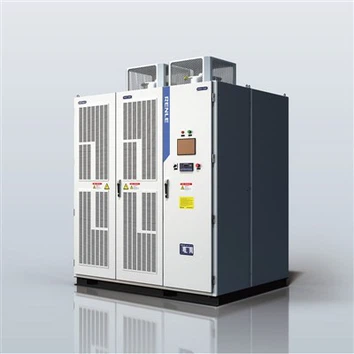


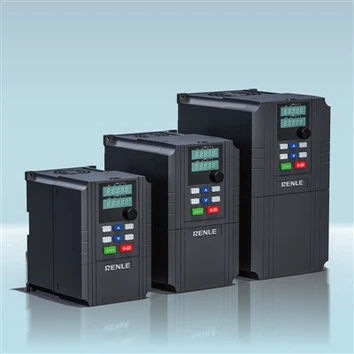


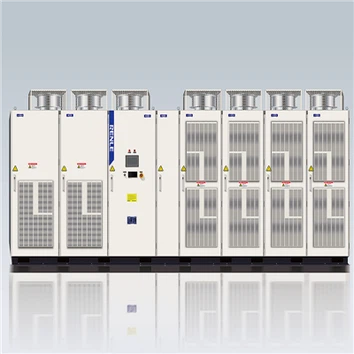


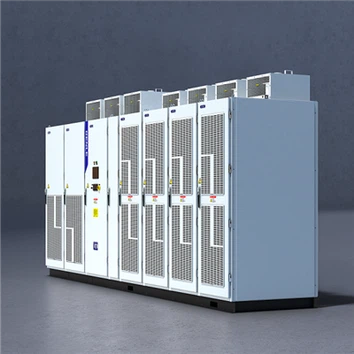


Why Choose Us
Professional Team
The company insists on people-oriented and technological innovation, and the R&D team accounts for more than 30% of the total number of employees. Invested heavily in the introduction of a complete set of precision instruments and experimental equipment.
Sales Market
Our product Export United States, Vietnam, Japan, Britain, Italy, Russia, India, Brazil, Spain, the Middle East and other countries and regions.
Rich Experience
We has 20+ years of research, 120+Professional sales service, engineers / person and 35 Presence in /countries.

Variable Frequency Drive - Overview
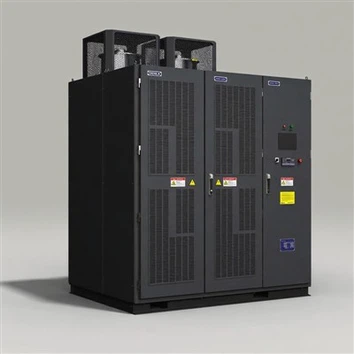
A Variable Frequency Drive (VFD) is an electronic device that controls the speed and torque of an AC electric motor by varying the frequency and voltage of the power supply to the motor. Also known as AC drives or inverters, VFDs improve energy efficiency and performance by allowing motors to run at precisely the required speed for a given application, rather than at a constant full speed. They achieve this by converting the incoming AC power to DC, then back to a variable-frequency AC output for the motor.
Product Specification
We offers the following product specifications
|
Name |
Item |
Specification |
|
Input |
1000 Series Power |
3-phase 6kV/10kV, frequency: 50/60Hz |
|
Supply |
||
|
Input voltage range |
Voltage: -10% to +10%; Frequency: ±2% |
|
|
Output |
1000 Series |
3-phase 6kV/10kV, frequency: 50/60Hz |
|
Rated Voltage |
||
|
Frequency |
0 j 50/60Hz |
|
|
Modulation range |
||
|
Setting resolution |
0.01 Hz |
|
|
Overcurrent |
120% of rated output current for 1 minute every 10 minutes; |
|
|
Capability |
150% of rated output current for instantaneous protection. |
|
|
Control |
Control method |
V/F control with PG vector control and without PG vector control. |
|
Synchronous |
The frequency converter follows the voltage phase and frequency of the power grid, achieving a state |
|
|
Switching |
Of grid connection and smooth switching from frequency converter to power frequency without impact |
|
|
Torque |
Automatic torque boost during startup to reach above 150%. |
|
|
Compensation |
||
|
Slip compensation |
Compensates for speed drop under load to enhance mechanical robustness. |
|
|
Upper and lower |
Upper and lower frequency limits can be set. |
|
|
Frequency limits |
||
|
Skip frequency |
Skip frequency can be set in 3 groups. |
Advantages of Variable Frequency Drive
Enhanced Energy Efficiency
Among the most compelling benefits of VFDs is their remarkable ability to enhance energy efficiency, which, in turn, trims down energy expenses. Motors typically constitute a substantial portion of energy consumption, particularly within industrial setups. VFDs come to the rescue by skillfully governing motor speed, particularly when the motor doesn’t require full-throttle power or a consistent pace.
Controlled Starting Current
VFDs offer another feather in their cap by effectively managing the startup current. They possess the capability to initiate motors at zero voltage and frequency, which not only minimizes the wear and tear on motors but also extends their operational lifespan, reducing the need for frequent maintenance and repair.
Equipment Safeguard
Another remarkable aspect of VFDs is their capacity to tailor and limit torque, ensuring that motors do not venture beyond their safe torque limits. This proactive measure shields machinery and equipment, preempting damage and averting potential production disruptions.
Voltage Sag Mitigation
Voltage sags, characterized by transient voltage drops, frequently plague industrial settings, often occurring during the activation of sizable AC motor lines. These sags can be detrimental to delicate equipment like computers and sensors. VFDs circumvent this issue by starting the motor at zero voltage and gradually increasing it from there.
Precision Process Control
VFDs can be programmed to run motors at ideal speeds or halt at predefined positions, surpassing other motor control methods in precision. Moreover, many VFDs can be remotely controlled, offering heightened flexibility.
Noise Reduction
While not their primary purpose, VFDs do the service of reducing ambient noise levels by operating motors at lower speeds. This feature is particularly advantageous in industrial environments where lowered ambient noise levels contribute to improved working conditions and smoother communication on the factory floor. This small but significant improvement creates a more conducive work environment.
Types of Variable Frequency Drive
VSI type VFDs
The VSI or Voltage Source Inverter type VFD is the most common type. it provides a smooth voltage waveform that depends on the output frequency. It has a very simple design including a simple diode rectifier with a capacitor for filtering and storing DC energy. The DC voltage is then converted into AC using an inverter. They offer very good operating speed and control multiple motors.
CSI type VFDs
CSI or Current Source Inverter type VFD provides a smooth current waveform as opposed to the smooth voltage waveform of the VSI type. It utilizes large inductors and expensive inductors to store and deliver steady DC current.
PWM type VFD
PWM or Pulse Width Modulation is a technique where the duty cycle of a signal is varied to vary the average power delivered. PWM-based VFD uses fixed DC voltage pulses of different duty cycles to simulate a sinusoidal waveform. It is an improved version of VSI, therefore, it provides stable voltage with an improved power factor.


Uses For Variable Frequency Drive
Fans: A VFD can control the speed and airflow of fans according to the temperature, pressure, or humidity requirements. This can save energy, reduce noise, improve comfort, and extend fan life.
Pumps: A VFD can control the speed and flow rate of pumps according to the demand or level requirements. This can save energy, reduce wear, prevent water hammer, and improve process control.
Compressors: A VFD can control the speed and pressure of compressors according to load and process requirements. This can save energy, reduce wear, prevent surges, and improve process control. A VFD can also provide soft starting and stopping of the compressor, which can reduce inrush current, voltage drop, mechanical stress, and wear and tear. A VFD can also monitor and diagnose the condition of the compressor and the system by using networking and diagnostic capabilities.
Components of Variable Frequency Drive
Converter
The converter, or AC input rectifier, help convert the AC voltage to a DC voltage. The converter is made up of multiple diodes that are connected parallel to each other and only allow the current to travel in one direction. The electricity that is flowing through the converter is cycled through until it is transformed into a rough DC voltage.
DC Link
DC Link is a filtering section made up of filter inductors and capacitors. The purpose of DC Link is to smoothen the rippled DC voltage obtained out of the rectifier circuit in the previous step. The filtered output is then fed to the input of the inverter.
Inverter
The purpose of the Inverter is to convert the output of the DC link, which is the filtered DC voltage, back into AC. The Inverter is used to control the variable voltage, variable frequency output to the motor. The Inverter is composed of IGBT switches that are connected in pairs to control the electrical flow.
User interface
To achieve optimal power usage or save energy, a user interface is needed to configure the VFD. A User interface is a control panel that is connected the VFD, allowing for manual user input. These range from a keypad to LCD touch screens. Newer systems offer Bluetooth wireless control panels.
Control logic
The user defined setting is then interpreted by the Control logic. It is the software needed for the VFD to communicate with the user interface and the feedback device on the motor. The software is usually based on a state diagram, which follows a set of sequences before completing a task from start to stop. This allows the VFD to be fully automated.
Customization Process
Requirement Discussion
Contact us and provide your design drawings, size specifications, and other technical parameters.
01
Design Proposal
Our professional team will develop a design proposal and provide a quotation based on your requirements.
02
Sample Production
We produce samples according to the design proposal and conduct rigorous testing.
03
Mass Production
Upon your approval, we commence mass production to ensure timely delivery and consistent quality.
04
After-Sales Service
We offer ongoing technical support and service to ensure the long-term stable operation of our products.
05
Package & Delivery
Package: Standard export package or Custom
Delivery: By air express, by sea

FAQ
We're well-known as one of the leading variable frequency drive manufacturers and suppliers in China. Please feel free to buy customized variable frequency drive made in China here from our factory. For pricelist and quotation, contact us now.