

Yo! As a supplier of Medium Voltage AC Drives, I've been knee - deep in the world of power grids and drive systems. Today, I wanna chat about the dynamic stability of a Medium Voltage AC Drive in power grids.
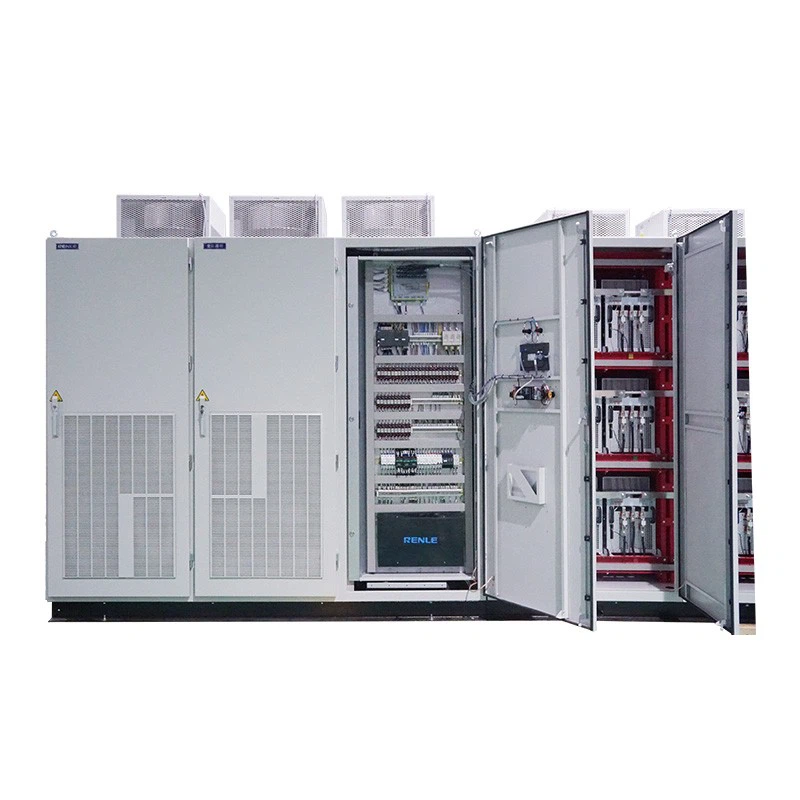

First off, let's get a basic understanding of what a Medium Voltage AC Drive is. A Medium Voltage AC Drive is a key component in many industrial and commercial power systems. It's used to control the speed and torque of AC motors by adjusting the frequency and voltage of the electrical supply. This not only helps in energy efficiency but also provides better control over the motor's operation.
Now, when we talk about dynamic stability in power grids, we're referring to how well the system can maintain its balance and functionality when it faces sudden changes or disturbances. These disturbances can come from various sources like sudden load changes, faults in the grid, or even environmental factors.
For a Medium Voltage AC Drive, dynamic stability is super important. When there's a disturbance in the power grid, the drive needs to be able to adapt quickly. If it can't, it might lead to issues like motor stalling, over - current, or even damage to the drive itself.
Let's dig a bit deeper into the factors that affect the dynamic stability of a Medium Voltage AC Drive in power grids.
Grid Voltage Fluctuations
One of the most common disturbances in power grids is voltage fluctuations. These can be caused by things like large industrial loads being switched on or off. When the grid voltage drops suddenly, the Medium Voltage AC Drive needs to be able to keep the motor running smoothly. If the drive can't handle the voltage drop, the motor might slow down or stop, which can disrupt the entire industrial process.
On the other hand, if the grid voltage spikes, the drive has to protect itself and the motor from over - voltage damage. Modern Medium Voltage AC Drives are equipped with voltage regulation mechanisms. They can adjust the output voltage and frequency to compensate for the grid voltage changes. For example, some drives use advanced control algorithms to sense the grid voltage and adjust the motor's input accordingly.
Frequency Variations
Frequency is another crucial parameter in power grids. The standard frequency in most power grids is either 50Hz or 60Hz. However, due to various reasons like generator malfunctions or sudden load changes, the grid frequency can deviate from this standard.
A Medium Voltage AC Drive needs to be able to operate within a certain frequency range. If the grid frequency goes too high or too low, the drive might not be able to control the motor properly. For instance, if the frequency drops, the motor might draw more current to maintain its speed, which can lead to over - heating and potential damage.
To deal with frequency variations, Medium Voltage AC Drives are designed with frequency - tracking capabilities. They can sense the grid frequency and adjust the motor's operation to match it. Some drives also have frequency - protection features that can shut down the motor if the frequency goes outside the safe operating range.
Faults in the Power Grid
Faults in the power grid, such as short - circuits or line - to - ground faults, can have a significant impact on the dynamic stability of a Medium Voltage AC Drive. When a fault occurs, the grid voltage can drop to very low levels, and there can be a large inrush of current.
A well - designed Medium Voltage AC Drive should be able to detect these faults quickly and take appropriate action. For example, it can isolate itself from the grid to prevent damage. Some drives are also equipped with fault - ride - through capabilities. This means that they can stay connected to the grid during a fault and resume normal operation once the fault is cleared.
Interaction with Other Grid Components
In a power grid, a Medium Voltage AC Drive doesn't operate in isolation. It interacts with other components like transformers, generators, and other loads. These interactions can also affect its dynamic stability.
For example, if there are other large loads in the grid that draw a lot of current, it can cause voltage drops and affect the performance of the Medium Voltage AC Drive. Similarly, the characteristics of the transformer supplying power to the drive can also have an impact. A transformer with a high impedance might cause more voltage drops during load changes.
To ensure good dynamic stability, it's important to consider the overall grid configuration when installing a Medium Voltage AC Drive. Engineers need to analyze the grid's electrical characteristics and design the drive system accordingly.
Advanced Control Strategies
To enhance the dynamic stability of Medium Voltage AC Drives, advanced control strategies are being developed. These strategies use sophisticated algorithms to optimize the drive's performance under different grid conditions.
For example, model - predictive control (MPC) is a popular technique. MPC uses a mathematical model of the drive and the grid to predict the future behavior of the system. Based on these predictions, it can make real - time adjustments to the drive's output to maintain stability.
Another approach is the use of artificial intelligence (AI) and machine learning (ML) in drive control. AI and ML algorithms can learn from past data and adapt to different grid disturbances. They can identify patterns in the grid behavior and make proactive adjustments to the drive's operation.
Comparison with High Voltage Drives
It's also interesting to compare the dynamic stability of Medium Voltage AC Drives with High Voltage Drives and High Voltage VFDs. High voltage drives operate at much higher voltages, which means they face different challenges.
High voltage drives are more likely to be affected by insulation issues and corona discharge. However, they can handle larger power capacities. Medium Voltage AC Drives, on the other hand, are more commonly used in medium - sized industrial applications. They offer a good balance between cost, performance, and dynamic stability.
In conclusion, the dynamic stability of a Medium Voltage AC Drive in power grids is a complex but crucial topic. As a supplier, we're constantly working on improving the design and performance of our drives to ensure they can handle various grid disturbances.
If you're in the market for a reliable Medium Voltage AC Drive, we'd love to have a chat. Whether you're looking to upgrade your existing system or install a new one, our team of experts can help you find the right solution for your needs. Reach out to us to start the procurement and negotiation process.
References
- Kundur, P. (1994). Power System Stability and Control. McGraw - Hill.
- Bose, B. K. (2002). Modern Power Electronics and AC Drives. Prentice Hall.
- Krause, P. C., Wasynczuk, O., & Sudhoff, S. D. (2002). Analysis of Electric Machinery and Drive Systems. Wiley - Interscience.