

As a supplier of High Voltage Drives, I've had the privilege of witnessing firsthand the transformative impact these powerful devices have on various industrial applications. In this blog post, I'll delve into the speed - torque characteristics of High Voltage Drives, exploring how they function, their benefits, and why they are a crucial component in modern industrial settings.
Understanding Speed - Torque Characteristics
Before we dive into the specifics of High Voltage Drives, it's essential to understand the basic concepts of speed and torque. Speed refers to the rotational velocity of a motor shaft, typically measured in revolutions per minute (RPM). Torque, on the other hand, is the rotational force that causes an object to rotate around an axis. It is measured in Newton - meters (N·m) or foot - pounds (ft - lb).
The relationship between speed and torque is fundamental to the operation of electric motors and drives. In general, as the speed of a motor increases, the available torque decreases, and vice versa. This relationship is often represented by a speed - torque curve, which shows how the torque output of a motor varies with its speed.

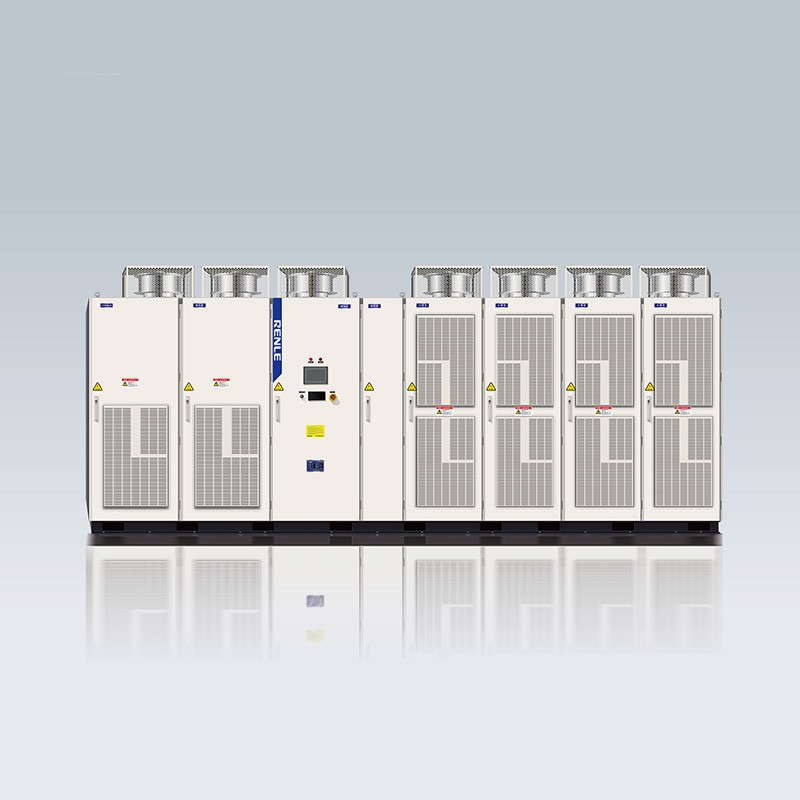
Speed - Torque Characteristics of High Voltage Drives
High Voltage Drives are designed to control the speed and torque of high - power electric motors. They offer several unique speed - torque characteristics that make them suitable for a wide range of industrial applications.
Constant Torque Operation
One of the key features of High Voltage Drives is their ability to provide constant torque over a wide speed range. In constant torque applications, the load requires a consistent amount of torque regardless of the motor speed. Examples of constant torque applications include conveyor belts, cranes, and hoists.
High Voltage Drives can maintain a constant torque output by adjusting the voltage and frequency supplied to the motor. This ensures that the motor can operate efficiently and reliably, even under varying load conditions. For instance, when a conveyor belt needs to start or stop, the High Voltage Drive can provide the necessary torque to overcome the inertia of the load and maintain a smooth operation.
Variable Torque Operation
In addition to constant torque operation, High Voltage Drives can also handle variable torque applications. In variable torque applications, the load torque varies with the square of the speed. Typical examples of variable torque applications include fans, pumps, and blowers.
For variable torque loads, High Voltage Drives can reduce the motor speed to save energy. As the speed of the motor decreases, the torque requirement also decreases significantly. By adjusting the voltage and frequency supplied to the motor, the High Voltage Drive can match the motor's output to the load requirements, resulting in substantial energy savings. For example, in a pumping system, reducing the motor speed by 20% can lead to a 50% reduction in energy consumption.
High Starting Torque
High Voltage Drives are capable of providing high starting torque, which is essential for applications that require a large amount of torque to start the motor. When a motor starts, it needs to overcome the static friction and inertia of the load. High Voltage Drives can supply a high initial current to the motor, which generates a high starting torque.
This high starting torque allows the motor to start smoothly and quickly, even under heavy load conditions. For example, in a large industrial compressor, the High Voltage Drive can provide the necessary starting torque to overcome the compression forces and start the compressor efficiently.
Benefits of High Voltage Drives' Speed - Torque Characteristics
The unique speed - torque characteristics of High Voltage Drives offer several benefits to industrial users.
Energy Efficiency
As mentioned earlier, High Voltage Drives can adjust the motor speed to match the load requirements, resulting in significant energy savings. By reducing the motor speed in variable torque applications, the drive can reduce the power consumption of the motor. This not only helps to lower operating costs but also contributes to environmental sustainability.
Improved Process Control
High Voltage Drives provide precise control over the motor speed and torque, which allows for better process control. In industrial processes, such as manufacturing and chemical production, precise control of motor speed and torque is crucial for maintaining product quality and consistency. High Voltage Drives can ensure that the motor operates at the optimal speed and torque, resulting in improved process efficiency and product quality.
Extended Motor Life
By providing smooth and controlled starting and stopping, High Voltage Drives can reduce the mechanical stress on the motor. This helps to extend the motor's lifespan and reduce maintenance costs. Additionally, the ability to adjust the motor speed and torque can prevent the motor from overheating and overloading, further protecting the motor from damage.
Comparison with Other Drives
When compared to other types of drives, such as Medium Voltage VSD and Medium Voltage AC Drive, High Voltage Drives offer distinct advantages in terms of speed - torque characteristics.
Medium Voltage VSDs are typically used for applications with lower power requirements. While they can provide good speed and torque control, they may not be suitable for high - power applications. High Voltage Drives, on the other hand, are designed to handle high - power motors and can provide higher starting torque and better energy efficiency in large - scale industrial applications.
Medium Voltage AC Drives are also commonly used in industrial settings. However, High Voltage Drives can offer more precise control over the motor speed and torque, especially in applications that require high - performance operation.
Applications of High Voltage Drives
High Voltage Drives are widely used in various industries, including oil and gas, mining, power generation, and manufacturing.
In the oil and gas industry, High Voltage Drives are used to control the speed and torque of pumps, compressors, and fans. These drives help to improve the efficiency of oil and gas production processes and reduce energy consumption.
In the mining industry, High Voltage Drives are used in conveyor systems, crushers, and mills. The high starting torque and precise speed control of these drives are essential for handling the heavy loads and harsh operating conditions in mining operations.
In the power generation industry, High Voltage Drives are used to control the speed of generators and pumps. They help to optimize the power generation process and improve the stability of the power grid.
In the manufacturing industry, High Voltage Drives are used in a variety of applications, such as machine tools, robotics, and material handling systems. The ability to provide constant or variable torque over a wide speed range makes these drives suitable for different manufacturing processes.
Conclusion
In conclusion, the speed - torque characteristics of High Voltage Drives make them a versatile and powerful solution for a wide range of industrial applications. Their ability to provide constant torque, variable torque, and high starting torque, along with their energy efficiency, improved process control, and extended motor life, make them an ideal choice for modern industrial settings.
If you're looking for a reliable and efficient High Voltage Drive solution for your industrial application, we invite you to explore our High Voltage Drive offerings. Our team of experts is ready to assist you in selecting the right drive for your specific needs. Contact us today to start a procurement discussion and take your industrial processes to the next level.
References
- Fitzgerald, A. E., Kingsley, C., & Umans, S. D. (2003). Electric Machinery. McGraw - Hill.
- Chapman, S. J. (2012). Electric Machinery Fundamentals. McGraw - Hill.
- Krause, P. C., Wasynczuk, O., & Sudhoff, S. D. (2002). Analysis of Electric Machinery and Drive Systems. Wiley - Interscience.