

As a supplier of low voltage soft starters, I often receive inquiries from customers in the pumping industry about whether our products can be used for pumps. This is a crucial question, as the proper selection of a soft starter can significantly impact the performance, efficiency, and lifespan of pump systems. In this blog, I will delve into the technical aspects and practical considerations to provide a comprehensive answer.
Understanding Low Voltage Soft Starters
Low voltage soft starters are devices designed to gradually ramp up the voltage supplied to an electric motor during startup. This controlled acceleration reduces the inrush current, which is typically several times higher than the motor's rated current during direct-on-line (DOL) starting. By minimizing the inrush current, soft starters prevent electrical and mechanical stress on the motor and the connected equipment.
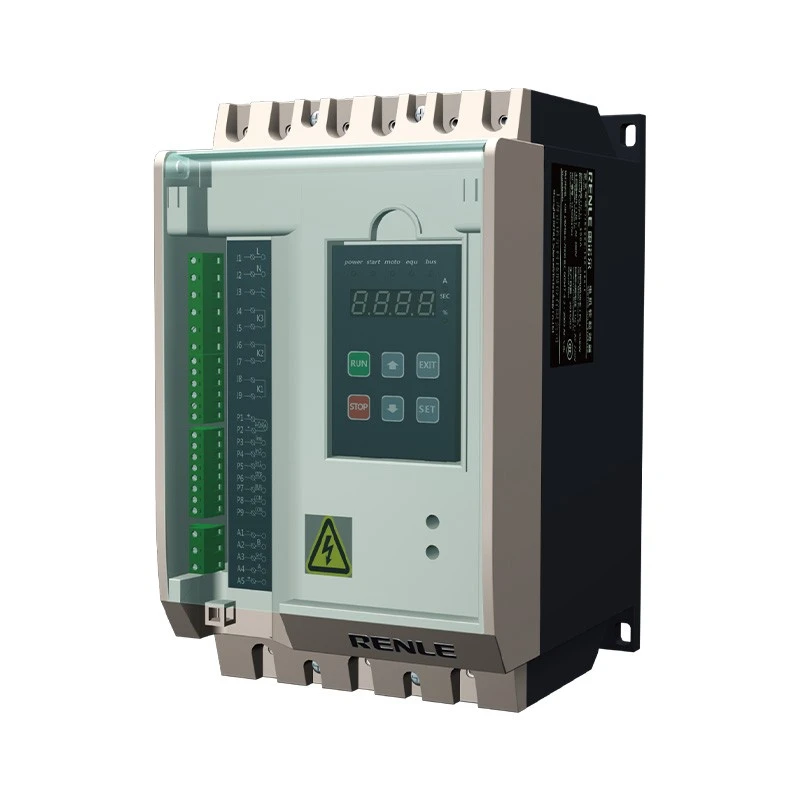
There are different types of low voltage soft starters available in the market, including Solid State Soft Starter. Solid-state soft starters use semiconductor devices, such as thyristors, to control the voltage applied to the motor. They offer precise control over the starting process and can be adjusted to suit different motor and load requirements.
Suitability of Low Voltage Soft Starters for Pumps
Pumps are widely used in various industries, including water supply, wastewater treatment, oil and gas, and manufacturing. The starting characteristics of pumps can vary depending on the type of pump (e.g., centrifugal, positive displacement), the size of the pump, and the system requirements.
Centrifugal Pumps
Centrifugal pumps are the most common type of pumps used in industrial and commercial applications. They are known for their simplicity, reliability, and efficiency. When starting a centrifugal pump, the initial torque required is relatively low, but the inrush current can still be significant. A low voltage soft starter can be an ideal solution for centrifugal pumps, as it can gradually increase the motor speed and reduce the inrush current, thereby minimizing the stress on the pump and the motor.
For example, in a water supply system, a centrifugal pump may need to start and stop frequently. Using a low voltage soft starter can prevent water hammer, which is a phenomenon that occurs when the flow of water is suddenly stopped or started, causing pressure surges in the pipes. By gradually ramping up the motor speed, the soft starter can reduce the likelihood of water hammer and extend the lifespan of the pump and the piping system.

Positive Displacement Pumps
Positive displacement pumps, such as piston pumps and gear pumps, are used in applications where a constant flow rate is required. Unlike centrifugal pumps, positive displacement pumps require a higher initial torque to start. However, a low voltage soft starter can still be used for positive displacement pumps, provided that it is properly sized and configured.
When using a low voltage soft starter for a positive displacement pump, it is important to consider the pump's starting torque requirements. The soft starter should be able to provide enough torque to overcome the initial resistance of the pump and start the motor smoothly. Additionally, the soft starter should be able to handle the high inrush current associated with positive displacement pumps.
Advantages of Using Low Voltage Soft Starters for Pumps
There are several advantages of using low voltage soft starters for pumps, including:
- Reduced Inrush Current: As mentioned earlier, low voltage soft starters can significantly reduce the inrush current during motor startup. This not only protects the motor and the connected equipment from electrical stress but also reduces the demand on the electrical supply system.
- Smooth Starting and Stopping: A low voltage soft starter can provide a smooth and controlled starting and stopping process for the pump. This reduces the mechanical stress on the pump and the motor, extends their lifespan, and improves the overall reliability of the system.
- Energy Savings: By reducing the inrush current and the mechanical stress on the pump and the motor, a low voltage soft starter can help to save energy. Additionally, some soft starters are equipped with energy-saving features, such as automatic torque control, which can further optimize the energy consumption of the pump.
- Improved System Performance: A low voltage soft starter can improve the performance of the pump system by reducing the wear and tear on the pump and the motor, minimizing the likelihood of water hammer, and providing better control over the pump speed.
Considerations When Selecting a Low Voltage Soft Starter for Pumps
When selecting a low voltage soft starter for pumps, there are several factors that need to be considered, including:
- Motor Rating: The soft starter should be sized according to the motor's rated power, voltage, and current. It is important to choose a soft starter that can handle the starting and running requirements of the pump motor.
- Pump Type and Application: Different types of pumps have different starting characteristics and requirements. The soft starter should be selected based on the type of pump (e.g., centrifugal, positive displacement) and the application (e.g., water supply, wastewater treatment).
- System Requirements: The soft starter should be able to meet the specific requirements of the pump system, such as the starting time, the stopping time, and the acceleration and deceleration rates.
- Control Features: Some soft starters offer advanced control features, such as adjustable starting torque, current limit, and soft stop. These features can provide additional flexibility and control over the starting and stopping process of the pump.
Conclusion
In conclusion, a low voltage soft starter can be used for pumps, both centrifugal and positive displacement. It offers several advantages, including reduced inrush current, smooth starting and stopping, energy savings, and improved system performance. However, when selecting a low voltage soft starter for pumps, it is important to consider the motor rating, the pump type and application, the system requirements, and the control features.
If you are looking for a reliable and efficient low voltage soft starter for your pump system, we are here to help. Our company offers a wide range of Soft Start Motor Starter 3 Phase and 3 Phase Induction Motor Soft Starter products that are designed to meet the specific needs of different pump applications. Contact us today to discuss your requirements and find the best solution for your pump system.
References
- Electrical Engineering Handbook, Third Edition, Richard C. Dorf (Editor)
- Pump Handbook, Fourth Edition, Igor Karassik, Joseph P. Messina, Paul Cooper, Charles C. Heald