

Hey there! As a medium voltage switchgear supplier, I've been in the thick of the industry for quite some time. One of the most frequently asked questions I get is about the feeder protection functions in medium voltage switchgear. So, I thought I'd break it down for you in this blog post.
Let's start with the basics. Medium voltage switchgear is a crucial part of an electrical distribution system. It's used to control, protect, and isolate electrical equipment in the medium voltage range, typically between 1 kV and 36 kV. Feeders, on the other hand, are the conductors that carry electrical power from the source to the load. Feeder protection functions in medium voltage switchgear are designed to ensure the safe and reliable operation of these feeders.
Overcurrent Protection
One of the most fundamental feeder protection functions is overcurrent protection. This function is designed to detect when the current flowing through the feeder exceeds a pre - set limit. Overcurrent can be caused by a variety of factors, such as short circuits, overloads, or ground faults.
When an overcurrent condition is detected, the protection relay in the switchgear sends a signal to the circuit breaker. The circuit breaker then trips, interrupting the flow of current and preventing damage to the feeder and connected equipment. There are two main types of overcurrent protection: instantaneous overcurrent and time - delayed overcurrent.
Instantaneous overcurrent protection is designed to trip the circuit breaker immediately when the current exceeds a very high threshold. This is typically used to protect against short circuits, which can cause a large and sudden increase in current. Time - delayed overcurrent protection, on the other hand, allows the current to flow for a certain period of time before tripping the circuit breaker. This is useful for protecting against overloads, where the current is only slightly above the normal operating level.
Earth Fault Protection
Earth fault protection is another important feeder protection function. An earth fault occurs when an electrical conductor comes into contact with the earth or a grounded object. This can cause a dangerous situation, as it can lead to electric shock or damage to equipment.
Earth fault protection in medium voltage switchgear is designed to detect the presence of an earth fault and trip the circuit breaker to isolate the faulty feeder. There are several methods of earth fault protection, including residual current protection and zero - sequence current protection.
Residual current protection measures the difference between the phase currents in a three - phase system. If there is an earth fault, this difference will be non - zero, indicating the presence of a fault current flowing to the earth. Zero - sequence current protection, on the other hand, measures the sum of the phase currents. In a balanced three - phase system, this sum should be zero. If there is an earth fault, the zero - sequence current will be non - zero, and the protection relay will trip the circuit breaker.
Overvoltage and Undervoltage Protection
Overvoltage and undervoltage conditions can also pose a threat to the feeder and connected equipment. Overvoltage can cause insulation breakdown, while undervoltage can lead to equipment malfunction or reduced efficiency.
Overvoltage protection in medium voltage switchgear is designed to detect when the voltage exceeds a pre - set limit and trip the circuit breaker to protect the feeder. Undervoltage protection, on the other hand, trips the circuit breaker when the voltage drops below a certain level. These protection functions help to ensure that the feeder operates within the safe voltage range.
Distance Protection
Distance protection is a more advanced feeder protection function. It is based on the principle that the impedance of a feeder is proportional to its length. By measuring the impedance between the protection relay and the fault location, distance protection can accurately determine the location of a fault on the feeder.
When a fault is detected, the distance protection relay calculates the impedance and compares it to a pre - set impedance characteristic. If the measured impedance falls within the characteristic, the relay sends a signal to the circuit breaker to trip. Distance protection is particularly useful for long feeders, where it can provide fast and accurate fault detection and isolation.
Directional Protection
Directional protection is used to determine the direction of the fault current flow. This is important in systems where there are multiple sources of power or where the fault current can flow in different directions.
Directional protection relays use the phase relationship between the voltage and current to determine the direction of the fault current. If the fault current is flowing in the wrong direction, the relay will trip the circuit breaker to isolate the faulty feeder. This helps to prevent the spread of faults and ensures the stability of the electrical system.
The Role of Medium Voltage Cubicle
Now, let's talk about the Medium Voltage Cubicle. A medium voltage cubicle is an essential part of the medium voltage switchgear. It houses the circuit breakers, protection relays, and other components of the switchgear in a safe and enclosed environment.

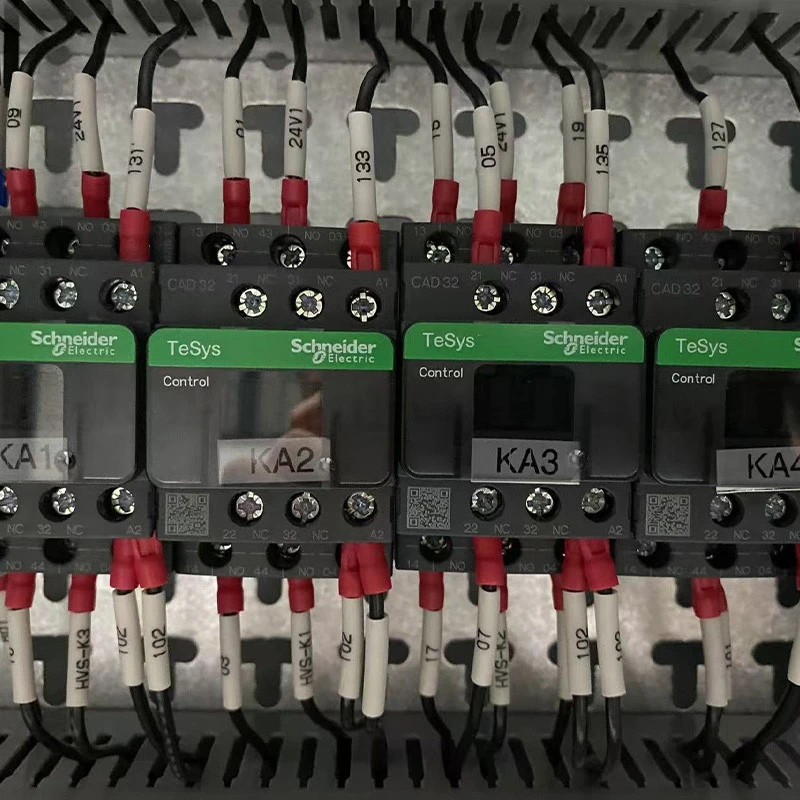
The cubicle provides protection against dust, moisture, and mechanical damage, ensuring the reliable operation of the switchgear. It also helps to prevent accidental contact with live parts, improving the safety of the electrical system.
Why Choose Our Medium Voltage Switchgear?
As a medium voltage switchgear supplier, we understand the importance of reliable feeder protection functions. Our switchgear is designed and manufactured to the highest standards, using the latest technology and high - quality components.
We offer a wide range of feeder protection functions, including overcurrent, earth fault, overvoltage, undervoltage, distance, and directional protection. Our protection relays are highly sensitive and accurate, ensuring fast and reliable fault detection and isolation.
In addition, our medium voltage cubicles are designed for easy installation, operation, and maintenance. They are available in a variety of configurations to meet the specific needs of our customers.
Let's Talk!
If you're in the market for medium voltage switchgear with top - notch feeder protection functions, I'd love to hear from you. Whether you're working on a small - scale project or a large industrial installation, we have the solutions to meet your requirements. Contact us today to start a conversation about your switchgear needs and let's find the perfect solution together.
References
- Electric Power Systems: Analysis and Control by Claudio A. Cañizares
- Power System Protection and Switchgear by A. J. Birch