

In the modern digital age, data centers have become the backbone of global business operations, housing vast amounts of servers and networking equipment that process and store an ever - increasing volume of data. With the high - density deployment of power - electronic devices in data centers, issues related to power quality have emerged as a critical concern. One of the solutions that has been proposed to address these power quality issues is the use of active power filters. As an active power filter supplier, I will delve into the question of whether an active power filter can be used in data centers.
The Power Quality Challenges in Data Centers
Data centers are filled with a large number of non - linear loads, such as switch - mode power supplies (SMPS), uninterruptible power supplies (UPS), and variable - frequency drives (VFD). These non - linear loads draw current in a non - sinusoidal manner, which results in the generation of harmonics. Harmonics are currents or voltages with frequencies that are integer multiples of the fundamental frequency (usually 50Hz or 60Hz).
The presence of harmonics in a data center's electrical system can lead to several problems. Firstly, harmonics can cause overheating in transformers, generators, and cables. This is because the additional harmonic currents increase the effective current flowing through these components, leading to increased resistive losses (I²R losses). Over time, this overheating can reduce the lifespan of the equipment and increase the risk of electrical fires.
Secondly, harmonics can cause interference with sensitive electronic equipment. The distorted voltage waveforms can lead to malfunctions in servers, networking devices, and other critical components. This can result in data corruption, system downtime, and ultimately, significant financial losses for the data center operators.
Thirdly, power factor degradation is another consequence of harmonics. A low power factor means that the electrical system is less efficient, as more current is required to deliver the same amount of real power. This not only increases energy consumption but also can lead to higher electricity bills due to penalties imposed by utility companies for poor power factor.
How Active Power Filters Work
Active power filters (APFs) are advanced power - electronic devices designed to mitigate the effects of harmonics and improve power factor. Unlike passive filters, which use inductors, capacitors, and resistors to filter out specific harmonic frequencies, active power filters use power electronics and control algorithms to actively inject counter - currents into the electrical system.
The basic principle of an active power filter involves continuously monitoring the load current. The APF analyzes the harmonic content of the load current using a control algorithm, typically based on fast Fourier transform (FFT). Once the harmonic components are identified, the APF generates and injects equal - magnitude but opposite - phase currents into the electrical system. These counter - currents cancel out the harmonic currents, resulting in a sinusoidal current waveform at the point of connection.
In addition to harmonic mitigation, active power filters can also improve power factor. By adjusting the phase angle between the voltage and current, the APF can bring the power factor closer to unity. This reduces the reactive power in the system, making it more efficient.
Advantages of Using Active Power Filters in Data Centers
- Harmonic Mitigation: As mentioned earlier, data centers are prone to high levels of harmonics due to the large number of non - linear loads. Active power filters can effectively reduce the harmonic distortion to within acceptable limits, as defined by international standards such as IEEE 519. This helps to protect the electrical equipment from overheating and interference, ensuring the reliable operation of the data center.
- Power Factor Improvement: By improving the power factor, active power filters can reduce the overall energy consumption in the data center. This not only saves on electricity costs but also reduces the stress on the electrical infrastructure. A higher power factor also means that the data center can make better use of its existing electrical capacity, potentially delaying the need for costly upgrades to the power distribution system.
- Flexibility: Active power filters are highly flexible compared to passive filters. They can adapt to changes in the load characteristics in real - time. For example, if new servers are added to the data center, the APF can automatically adjust its operation to continue providing effective harmonic mitigation and power factor correction.
- Enhanced Equipment Lifespan: By reducing the stress on electrical equipment caused by harmonics and poor power factor, active power filters can extend the lifespan of transformers, generators, cables, and other critical components. This reduces the need for frequent equipment replacements, resulting in long - term cost savings for the data center operators.
Case Studies of Active Power Filter Applications in Data Centers
There have been several successful implementations of active power filters in data centers around the world. For example, a large - scale data center in Asia was experiencing frequent equipment failures and high energy consumption due to harmonic distortion. After installing an active power filter system, the harmonic distortion was reduced from over 30% to less than 5%. The power factor improved from 0.7 to 0.95, resulting in a significant reduction in energy consumption and a decrease in equipment downtime.
In another case, a European data center was facing power factor penalties from the utility company. By installing an active power filter, the power factor was improved to near - unity, eliminating the penalties and reducing the overall electricity costs. The data center also reported improved reliability of its servers and networking equipment, as the harmonic - related interference was effectively eliminated.
Considerations for Implementing Active Power Filters in Data Centers
While active power filters offer many benefits for data centers, there are also some considerations that need to be taken into account before implementation.
- Cost: Active power filters are generally more expensive than passive filters. The initial investment includes the cost of the APF unit, installation, and commissioning. However, it is important to consider the long - term cost savings in terms of energy consumption, equipment lifespan, and reduced downtime when evaluating the cost - effectiveness of an APF.
- Size and Installation: Active power filters require a certain amount of physical space for installation. In a data center where space is often at a premium, careful planning is needed to ensure that there is enough room for the APF unit and its associated cabling. Additionally, the installation process needs to be carried out by experienced professionals to ensure proper operation and safety.
- Compatibility: The active power filter needs to be compatible with the existing electrical infrastructure in the data center. This includes considerations such as the voltage level, current rating, and grounding system. It is important to work with a knowledgeable supplier who can provide detailed technical support and ensure that the APF is properly integrated into the data center's electrical system.
Conclusion
In conclusion, active power filters can be a valuable addition to data centers. The power quality challenges faced by data centers, such as harmonics, power factor degradation, and equipment interference, can be effectively addressed by using active power filters. The benefits of harmonic mitigation, power factor improvement, flexibility, and enhanced equipment lifespan make APFs a compelling solution for data center operators.
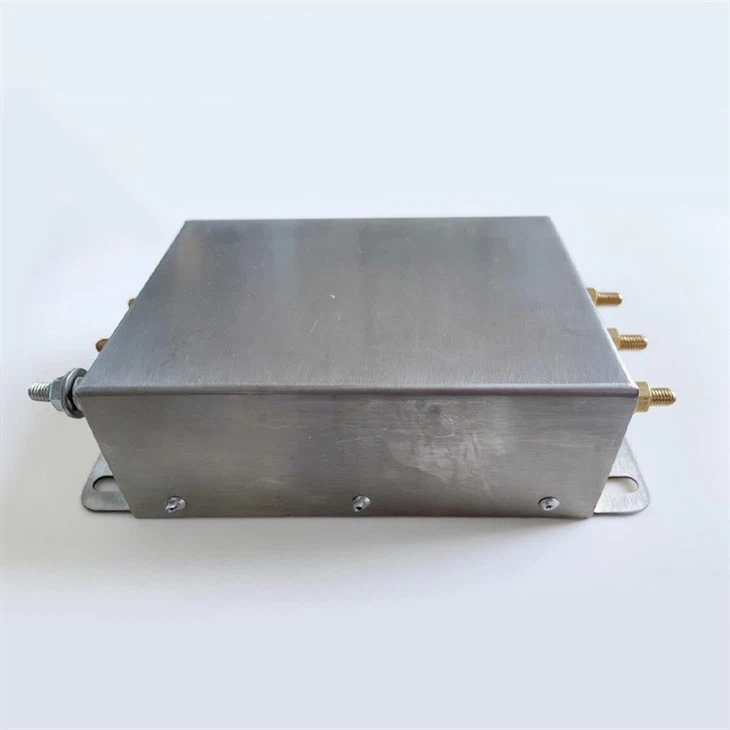
As an active power filter supplier, we have the expertise and experience to provide high - quality APF solutions tailored to the specific needs of data centers. Our Electrical Harmonic Filter is designed to offer reliable and efficient harmonic mitigation and power factor correction.
If you are a data center operator looking to improve the power quality of your facility, we invite you to contact us for a detailed consultation. Our team of experts can assess your data center's electrical system, recommend the most suitable active power filter solution, and guide you through the installation and commissioning process. Let us work together to ensure the reliable and efficient operation of your data center.

References
- IEEE Standard 519 - 2014, “IEEE Recommended Practices and Requirements for Harmonic Control in Electrical Power Systems”.
- Mohan, N., Undeland, T. M., & Robbins, W. P. (2012). Power Electronics: Converters, Applications, and Design. John Wiley & Sons.
- Erickson, R. W., & Maksimovic, D. (2001). Fundamentals of Power Electronics. Springer.